
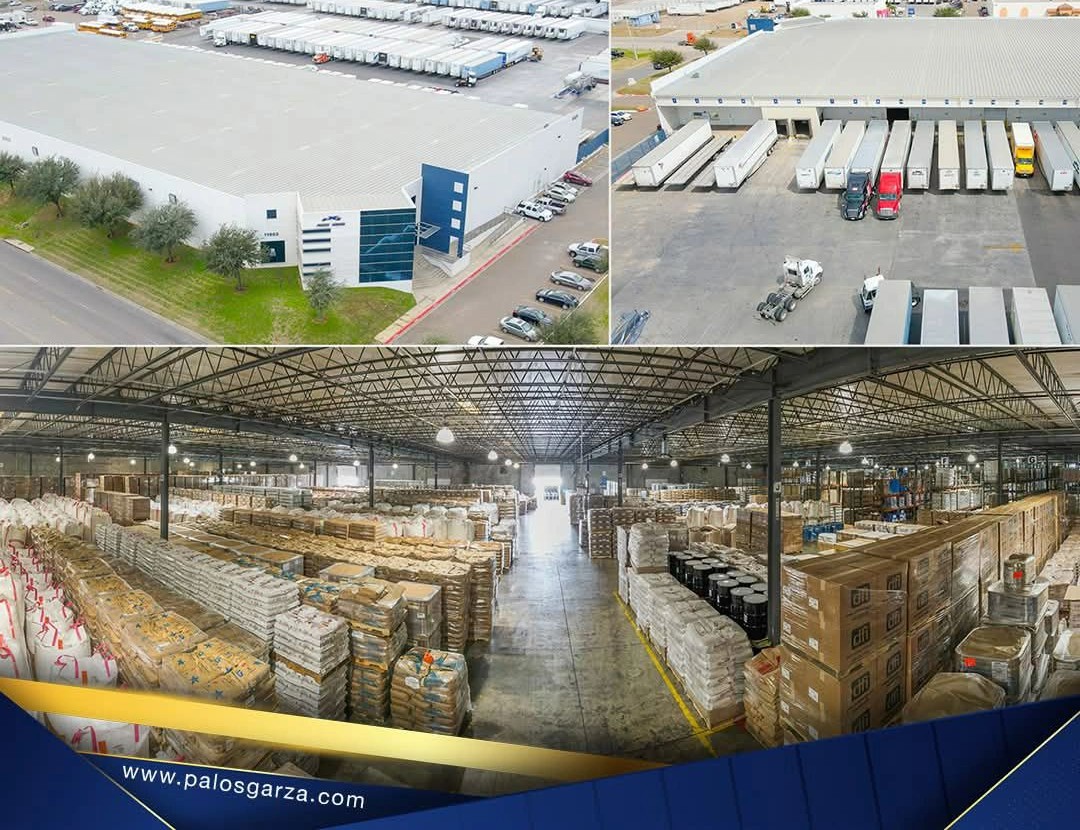
For years, the logistics conversation in Mexico focused on ports, transportation costs and import efficiency. Today, for many manufacturers operating in Mexico, the reality is different: the operation is no longer defined only at the port. It is defined at the border.
In that context, Nuevo Laredo has consolidated itself as one of the most critical points in the Mexico–United States logistics network.
From gateway to critical node: the change many companies felt too late
Laredo is no longer just a crossing point. It has become a node that defines the rhythm of North American supply, especially for industries operating with continuous production, lean inventories and customer-synchronized deliveries.
In this environment, the problem is not crossing. The problem is crossing consistently.
When 24 hours is no longer a detail, but a disruption
In traditional operations, a one- or two-day delay can sometimes be absorbed. In advanced manufacturing, it cannot.
Micro-case 1: production misalignment. A company with a plant in northern Mexico supplies components to the United States under a just-in-time model. A shipment crosses 24 hours late due to border saturation.
- production line pressure
- use of safety stock
- delivery rescheduling
The crossing was completed. But the operation had already lost alignment.
The most expensive bottleneck is not always visible in the average
Many analyses still focus on average crossing times. In Laredo, however, the critical factor is not the average. It is variability: stable-flow days, saturation days and windows where document validation becomes slower.
For sensitive operations, this variability translates into additional inventory, greater working capital and pressure on logistics planning.
When the rate does not change, but the cost appears anyway
Micro-case 2: invisible cost. A company increases volume toward the United States under favorable commercial conditions. The cost per crossing does not change significantly. But time variability creates 1.5 additional average days in transit, more inventory in the network and production-planning adjustments.
The impact does not appear in the logistics rate. It appears in the financial statements.
Colombia is not a rescue route; it is network architecture
As pressure grows in Laredo, some operations begin to integrate alternative crossings such as Colombia. This crossing can offer greater stability in certain periods, lower relative saturation and operating alternatives during demand peaks.
However, its effectiveness depends on prior planning. It does not work as a reactive solution. It works as part of a designed logistics architecture.
Monterrey appears when the network has lost stability
When the border loses rhythm, a clear pattern appears: the use of Monterrey International Airport increases.
Micro-case 3: migration to air. A critical shipment fails to cross within the expected window. The company decides to send part of the shipment by air to avoid affecting production. The operation is saved, but the margin is affected.
Air freight is not the cause. It is the consequence of a network that lost stability.
The design mistake: still thinking of the operation as a straight line
Many logistics teams still design operations under a linear logic: origin → transportation → crossing → delivery. Current reality requires network thinking: multiple entry points, different exit routes and absorption capacity during peaks. Above all, it requires operating redundancy.
What is really at stake is not the crossing; it is continuity
For companies operating in Mexico, the border crossing is no longer just another step. It is the point where production continuity, customer compliance and financial stability are defined. Laredo is not the problem, but it is where problems become visible.
What comes next: balance the network before volume forces it
As volume continues growing, depending on a single corridor becomes increasingly risky. More companies are evaluating alternative routes, flow redistribution and integration of new ports. In this context, Gulf of Mexico corridors are becoming more relevant within logistics strategy.
At Palos Garza, we work with manufacturers that need more than crossing execution. We help design operations that maintain stability even under border variability.